
The gut-brain connection matters when brain fog comes with bloating, constipation, diarrhea, reflux, or food reactions. This post explains how gut inflammation, dysbiosis, and intestinal permeability can affect focus and energy, and what patterns to look for. For the full step-by-step plan to sort out causes, start here: Brain Fog Causes Guide.
⚠️ Important Medical Disclaimer
This article is for educational purposes only and should not be construed as professional medical advice, diagnosis, or treatment recommendations.
Key Points:
- This information is based on current research and clinical experience but may not apply to your individual situation
- The gut-brain connection is complex; brain fog has multiple causes beyond dysbiosis
- Always consult with a qualified healthcare provider before:
- Starting supplements or probiotics
- Making significant dietary changes
- Starting elimination diets
- Interpreting test results
- Making treatment decisions
When to Seek Immediate Medical Attention:
If your brain fog is accompanied by sudden onset (hours to days), severe headaches with vision changes, memory loss (not just processing slowness), confusion or disorientation, difficulty speaking or understanding, numbness, weakness, coordination problems, chest pain, or difficulty breathing, contact emergency services or your physician immediately.
Individual Variation:
Probiotics and dietary changes affect individuals very differently. What works for one person may not work for another. Some strategies may initially worsen symptoms before improving them. Genetic factors, medication interactions, and underlying conditions affect outcomes.
Results Take Time:
Most improvements from dietary and probiotic interventions take 8-12 weeks to become apparent. Be patient and consistent.
This content does not create a doctor-patient relationship. For personalized medical advice specific to your situation, consult with a healthcare professional, ideally one trained in functional medicine or nutritional neurology.
Already suspect gut issues are affecting your cognition?
We can help identify the root cause through comprehensive testing and personalized protocols.
Why your gut matters for brain clarity
Your gut and brain are in constant conversation. That communication isn’t metaphorical: it happens through nerves, bloodstream, immune signals and metabolites. The gut-brain axis links your digestive tract and central nervous system and may cause brain fog.
When your gut ecosystem is balanced and varied, you get the benefit of smooth communication, good nutrient absorption, and regulated immune activity. When things go off-track (microbial imbalance, food sensitivities, increased intestinal permeability) it can affect how your brain functions. A comprehensive bibliometric analysis of 458 publications from the peer-reviewed journal Frontiers in Neurology (2014-2023) confirmed the robust connection between gut dysbiosis and cognitive impairment, showing this isn’t fringe science. It’s mainstream neuroscience.
The communication pathways are sophisticated and measurable. The vagus nerve serves as the primary highway, with 80-90% of its fibers carrying signals from gut to brain, not the other way around. Your gut microbes produce or influence neurotransmitters like GABA, serotonin, dopamine, and histamine: chemicals that directly affect mood, focus, and mental clarity. When your microbial community shifts into dysbiosis, these neurotransmitter patterns change, and brain fog often follows.
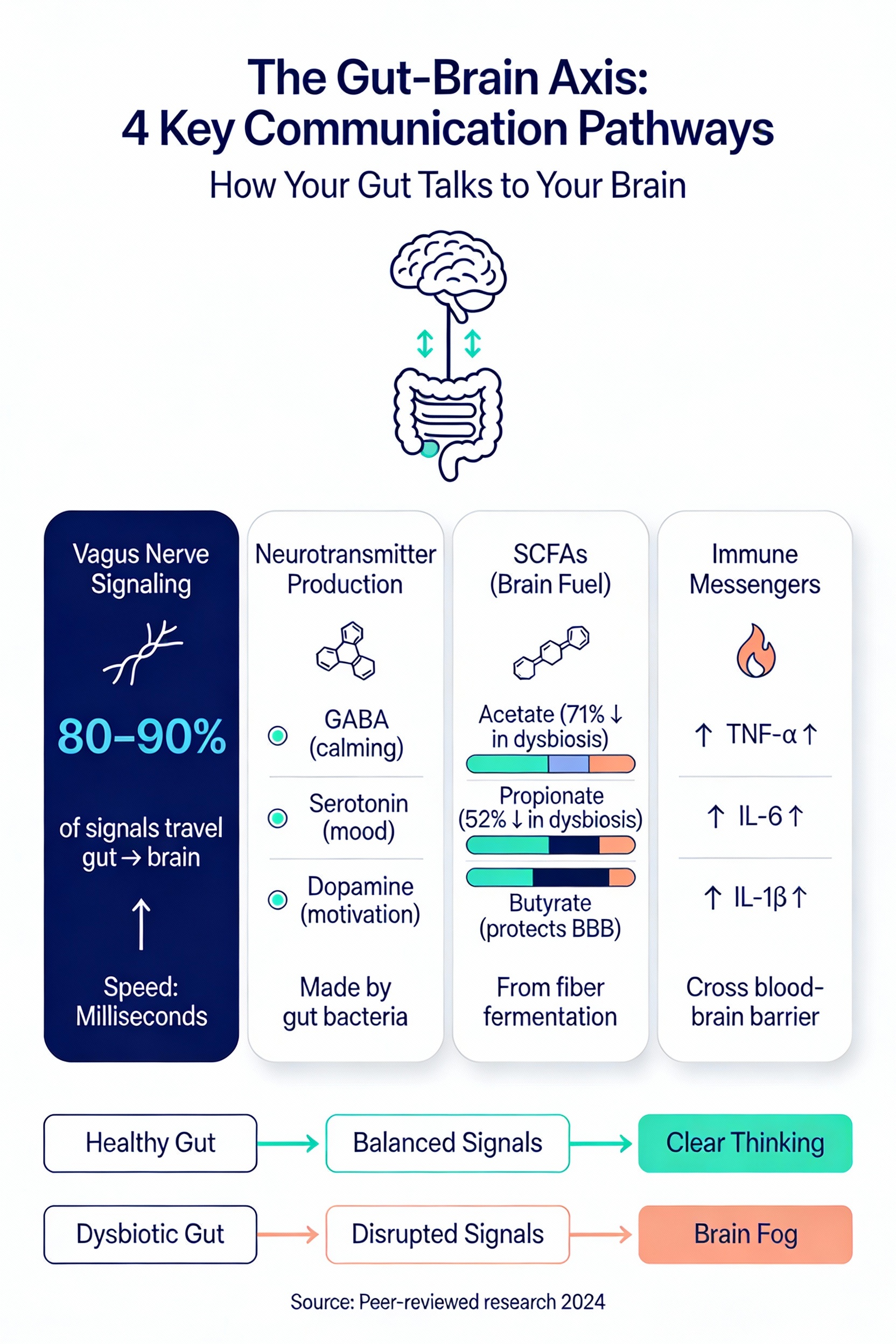
Research shows that gut dysbiosis associates with issues like mood changes, cognitive fog, even neuro-degenerative risks. In fact, common signs of dysbiosis include brain fog, fatigue and food sensitivities. It’s important to note that brain fog is also frequently driven by sleep deprivation, hormonal imbalance, anemia, thyroid disorders, mood disorders, and medication side effects. The gut-brain axis is one important piece of the puzzle, but not the only one, which is why comprehensive evaluation matters.
How gut dysbiosis, food sensitivities and leaky gut contribute to brain fog
Gut dysbiosis refers to imbalance in your gut microbes: too many of one type, too few of another, low diversity.
In that state the gut-brain axis communication can misfire: microbial metabolites, immune cytokines, vagus nerve signalling all go awry. For example, poor microbial diversity correlates with worse cognitive scores in middle and older age.
Food sensitivities create a chronic low-level stress on the gut lining and immune system. Repeated exposure to trigger foods may keep the gut in a state of irritation, raising inflammatory cytokines that influence brain function. While direct human trials are fewer, this mechanism shows up consistently in functional medicine practice.
Leaky gut (increased intestinal permeability) allows microbial particles and toxins to slip through the gut lining into circulation, triggering systemic inflammation. That inflammation can reach the brain and interfere with clarity, focus and memory.
Taken together: an irritated gut microenvironment means altered neurotransmitter production, immune activation, and metabolic stress. All of which can contribute to that foggy mental state.
The Science Behind Dysbiosis and Cognitive Impairment
The mechanisms aren’t mysterious. They’re measurable. Studies on short-chain fatty acids (SCFAs) in animal models of sepsis-associated encephalopathy show dramatic depletions in dysbiosis:
| SCFA Type | Healthy Level (mM) | Dysbiosis Level (mM) | Reduction | P-value |
|---|---|---|---|---|
| Acetate | 2.00 ± 0.24 | 0.57 ± 0.09 | 71% | p < 0.001 |
| Propionate | 0.66 ± 0.12 | 0.32 ± 0.06 | 52% | p = 0.002 |
| Butyrate | ~0.5-1.0 | Significantly reduced | 40-60% | p < 0.01 |
These aren’t trivial shifts. SCFAs are primary fuel sources for your brain and critical for maintaining the blood-brain barrier. While most controlled data comes from animal research, observational studies in humans show similar patterns of SCFA depletion correlating with cognitive symptoms.
When dysbiosis takes hold, inflammatory markers surge. A 2024 systematic review and meta-analysis published in BMC Neurology examining probiotic interventions in Alzheimer’s animal models showed significant reductions in key inflammatory cytokines when gut balance was restored:
- TNF-α (tumor necrosis factor-alpha): SMD = -2.08, P = 0.005
- IL-6 (interleukin-6): SMD = -2.98, P < 0.0005
- IL-1β (interleukin-1 beta): SMD = -2.49, P = 0.003
These inflammatory molecules don’t stay in the gut: they cross into circulation and signal the brain to enter a protective, but cognitively impaired, state.
Short-Chain Fatty Acids: Your Brain’s Fuel from the Gut
SCFAs (primarily acetate, propionate, and butyrate) are produced when beneficial gut bacteria ferment dietary fiber. These molecules do far more than support digestion. Research published in the Journal of Clinical Investigation shows that butyrate crosses the blood-brain barrier and acts as an HDAC inhibitor, increasing brain-derived neurotrophic factor (BDNF), which is essential for memory consolidation and neuroplasticity.
Recent research from Aging and Disease Journal (2025) in aged mice demonstrated that SCFA supplementation mitigates hippocampal atrophy and improves performance on semantic and phonemic fluency tests. Lower acetate levels correlate directly with cognitive decline. This goes beyond simple correlation and supports a plausible mechanistic pathway, though more human clinical data are still needed to fully establish causality.
SCFAs also protect the blood-brain barrier by upregulating tight junction proteins like ZO-1, Occludin, and Claudins. When dysbiosis reduces SCFA production, the blood-brain barrier becomes more permeable, allowing inflammatory molecules and bacterial metabolites to reach brain tissue and trigger neuroinflammation.
How Leaky Gut Triggers Neuroinflammation
Increased intestinal permeability (leaky gut) allows lipopolysaccharides (LPS) from gram-negative bacteria to enter the bloodstream. LPS is a potent immune activator that triggers systemic inflammation. Once in circulation, LPS and inflammatory cytokines can activate microglia in the brain, creating a state of neuroinflammation characterized by oxidative stress, mitochondrial dysfunction, and impaired neurotransmitter metabolism.
This mechanism is supported by both animal models and human observational data. Patients with confirmed elevated LPS and low probiotic counts consistently report brain fog, and when gut integrity is restored through targeted interventions, cognitive symptoms often improve.
Scientific Evidence: What the Research Shows
The gut-brain connection isn’t alternative medicine. It’s evidence-based neuroscience. The 2024 bibliometric analysis by He et al. examined 458 publications spanning a decade and identified consistent patterns: gut dysbiosis correlates with cognitive impairment across multiple populations and conditions.
Research on neurotransmitter regulation by Chen et al. (2021) mapped how specific bacterial strains influence brain chemistry:
| Bacterial Strain | Neurotransmitter Affected | Mechanism | Cognitive Impact |
|---|---|---|---|
| Bifidobacterium longum | GABA (gamma-aminobutyric acid) | Direct production | May reduce anxiety, improve focus |
| Lactobacillus plantarum | Serotonin pathways | Modulates tryptophan metabolism | May improve mood, mental clarity |
| Bacteroides fragilis | Dopamine | Influences synthesis pathways | May enhance motivation, attention |
| Lactobacillus rhamnosus | GABA receptors | Vagal nerve signaling | May reduce stress response, brain fog |
When these populations are depleted or imbalanced, neurotransmitter synthesis may be affected, potentially contributing to brain fog.
Probiotic intervention studies provide compelling evidence from animal research. The 2024 meta-analysis by Siripaopradit et al. demonstrated that targeted probiotic supplementation (primarily Lactobacillus and Bifidobacterium strains) significantly reduced neuroinflammatory markers and improved cognitive function in Alzheimer’s disease animal models. The effect sizes were substantial, not marginal improvements, but clinically meaningful changes in the experimental setting.
Studies on neuroinflammation and SCFAs show that restoring SCFA production reduces microglial activation and oxidative stress markers in the brain. This creates a measurable improvement in cognitive performance, including processing speed, working memory, and mental clarity.
The takeaway: addressing gut dysbiosis isn’t about treating isolated symptoms. It’s about correcting what may be a primary mechanism of cognitive dysfunction for many patients.
The research is clear: gut-brain connection matters.
But what’s driving YOUR specific symptoms?
Testing and Diagnosis: Identifying Your Gut-Brain Issues
Guesswork wastes time and money. Proper testing reveals the specific imbalances driving your brain fog so you can target interventions effectively.
Functional Testing Options
Comprehensive Stool Analysis evaluates microbiome diversity, beneficial bacteria populations, pathogenic overgrowth, and markers of inflammation. Tests like GI-MAP or Doctor’s Data GI360 provide detailed insight into dysbiosis patterns, SCFA production capacity, and immune activation in the gut.
SIBO Breath Testing measures hydrogen, methane, and hydrogen sulfide gases produced by bacterial overgrowth in the small intestine. SIBO is a common but often missed cause of both digestive symptoms and brain fog. Different gas patterns (hydrogen-dominant, methane-dominant, or hydrogen sulfide) typically require different treatment approaches. Note that breath tests have limitations in sensitivity and specificity, and results should be interpreted alongside clinical symptoms.
Food Sensitivity Panels (IgG, IgA testing) identify immune reactions to specific foods. Unlike IgE allergies (immediate reactions), these sensitivities create delayed inflammatory responses that can manifest as brain fog 24-48 hours after eating trigger foods.
Inflammatory Markers like high-sensitivity CRP, ESR, and cytokine panels measure systemic inflammation. Elevated levels indicate that gut inflammation may be affecting the entire body, including the brain.
Zonulin Testing measures intestinal permeability. Elevated zonulin levels suggest increased intestinal permeability (leaky gut), helping determine whether barrier repair should be a treatment priority.
What Dr. Zubkov Looks For
At Mind Body Neurology, testing isn’t about checking boxes. It’s about building a complete picture. Dr. Zubkov integrates gut testing with neurological assessment, hormone panels, nutrient status, and metabolic markers to identify not just what’s wrong, but why it’s wrong and how to fix it systematically.
In his clinical experience working with patients experiencing chronic brain fog, the approach combines conventional lab work with functional testing, looking at patterns across multiple systems. Brain fog rarely has a single cause: it’s usually a convergence of gut dysbiosis, mitochondrial dysfunction, hormonal imbalance, and inflammatory stress. Testing reveals where to start and how to prioritize interventions for each individual patient.
Ready to move beyond guesswork?
Dr. Zubkov will review your symptoms, order appropriate testing, and create a personalized gut-brain healing protocol.
Practical steps to improve gut health and clear brain fog
Let’s talk actionable moves you can start right away. These apply especially if you (or your patient) deal with brain fog, food sensitivities, GI symptoms or a history of gut-stress. Remember: these are general educational guidelines, not personalized medical advice. Your specific protocol should be developed with your healthcare provider.
1. Prioritize dietary diversity and fibre
Feed the beneficial microbes. A diet high in diverse vegetables, fruits, legumes and whole grains supports microbial variety and production of short-chain fatty acids (SCFAs) which help gut lining integrity and brain health. Research by Clark & Mach (2020) emphasizes consuming 30+ different plant types weekly to maximize microbiome diversity.
Avoid a diet heavy in processed foods, saturated fats and added sugars. They tend to reduce microbial diversity and worsen cognitive clarity. Most people notice initial improvements in 4-6 weeks, with substantial changes by 8-12 weeks. Track energy levels, mental clarity after meals, and bowel regularity to monitor progress.
2. Choose fermented and probiotic-rich foods
Fermented foods (yogurt, kefir, kimchi, sauerkraut) and strategic probiotic supplementation help repopulate beneficial bacteria. This may alter gut-brain signalling and reduce fog. Start slowly (especially if you have sensitivities) and monitor response.
Consider evidence-based strains: Lactobacillus plantarum for serotonin support, Bifidobacterium longum for GABA production, and Lactobacillus rhamnosus for stress resilience. Not all probiotics work for everyone. Some people with SIBO or histamine intolerance may initially feel worse. If symptoms worsen after 1-2 weeks, pause and consult a practitioner.
3. Address food sensitivities with structure
If you suspect food triggers, consider a phased elimination of common reactive foods (gluten, dairy, soy, eggs) and then systematic reintroduction. Track cognitive clarity, focus, GI symptoms. Support the gut lining during this with nutrient-rich foods and minimize further irritation.
Keep a detailed food-symptom journal noting not just immediate reactions but also delayed responses 24-48 hours later. Many patients miss the connection between Tuesday’s wheat pasta and Thursday’s brain fog because the delay obscures the pattern.
4. Repair the gut lining
Support elements: adequate protein (for tight-junction repair), omega-3 fatty acids (anti-inflammatory), nutrients like zinc, vitamin D, and polyphenols. Also reduce factors that increase permeability: chronic stress, alcohol, lack of sleep, persistent antibiotic use.
Specific nutrients that may support gut barrier integrity include:
- L-glutamine (5-15g daily)
- Zinc carnosine (75-150mg daily)
- Vitamin D (maintain levels 50-80 ng/mL)
- Polyphenols from green tea, berries, and olive oil
Expect gradual improvement over 8-12 weeks as the gut lining regenerates. Discuss appropriate dosing with your healthcare provider.
5. Use targeted probiotics/supplements thoughtfully
Consider evidence-based probiotic strains for gut-brain support (for example select Lactobacillus and Bifidobacterium strains) under professional supervision. Monitor for improvement in mental clarity, not only GI symptoms.
Dosing matters: therapeutic probiotic doses typically range from 10-100 billion CFU daily. Lower doses may not create measurable change. Some practitioners recommend rotating strains every 2-3 months to prevent adaptation and maintain diversity, though this should be individualized based on your response.
6. Lifestyle supports for gut and brain
Move your body regularly, physical activity influences gut motility and microbial diversity. Manage stress (because stress alters gut flora and gut-brain signalling). Prioritize sleep so your brain clears waste and your gut regenerates overnight.
Exercise increases SCFA-producing bacteria and improves vagal tone, enhancing gut-brain communication. Aim for 30 minutes of moderate activity most days. Stress management through meditation, breathwork, or therapy reduces cortisol, which directly damages the gut lining. Sleep 7-9 hours nightly to support glymphatic drainage in the brain and gut barrier repair.
Real Recovery Stories: What Actually Works
Reading research is helpful, but real stories show what recovery looks like in practice. The following accounts are real-world experiences shared publicly on Reddit. They are not controlled clinical studies and should not be taken as medical advice or guaranteed outcomes. Individual results vary significantly, and what worked for these individuals may not work for everyone.
💬 Recovery Story #1: From 25+ Foggy Days to 5-6 Per Month
Reddit user u/Confident_Pain8516 shared:
“After enduring years of brain fog and anxiety that medical professionals attributed to mere ‘stress,’ I uncovered the significance of the gut-brain connection in my healing journey. The key insight? My brain fog occurred 24-48 hours AFTER digestive issues. A delayed reaction I never would have noticed without tracking.”
The protocol that worked for this individual:
Phase 1: Reduce Gut Inflammation (14 days)
- Removed identified trigger foods (gluten, processed oils, specific additives)
- Incorporated anti-inflammatory options (turmeric, omega-3s)
- Used specific herbs to soothe gut irritation
Phase 2: Restore Microbiome (ongoing)
- Added targeted probiotics
- Increased prebiotic fiber
- Ate homemade sauerkraut
- Cut sugar and seed oils completely
- 7-hour eating window (intermittent fasting)
Their results: “This sequential approach took me from 25+ foggy/anxious days per month to just 5-6, with both cognitive and emotional stability dramatically improved.”
Key Learning: “The key takeaway was that the sequence of interventions was crucial. Attempting to enhance brain function without first tackling gut inflammation was like trying to extinguish a fire with gasoline.”
Source: r/Microbiome, January 2025
Important note: This is one person’s experience and timeline. The specific supplements, foods, and protocols mentioned should be discussed with your healthcare provider before implementation, as individual needs vary significantly.
💬 Recovery Story #2: 5.5 Years of Brain Fog – Dysbiosis Recovery
Reddit user u/jenniferp88787 shared:
“I’m dealing with dysbiosis characterized by low probiotics and elevated LPS, along with POTS and hydrogen sulfide SIBO, which have led to significant brain fog.”
Testing revealed:
- Comprehensive stool analysis showing low beneficial bacteria
- Elevated LPS (lipopolysaccharides – bacterial toxins)
- Hydrogen sulfide SIBO confirmed
- POTS (Postural Orthostatic Tachycardia Syndrome) diagnosis
Treatment approach with their functional medicine practitioner:
- Specific foods tailored to address dysbiosis (individualized approach)
- Minimal supplements (not excessive supplementation)
- Used Biomesight testing for microbiome analysis
- Fasting protocols
Their results: “For the past two weeks, I’ve been free from brain fog, despite having struggled with it for two months due to severe symptoms. Additionally, my POTS symptoms are getting better!”
Key Insight: “Correcting dysbiosis would definitely improve brain fog. Often brain fog is caused by an overgrowth of bad strains in the gut.”
Source: r/Longcovidgutdysbiosis, September 2024
Important note: This individual worked closely with a functional medicine practitioner and had comprehensive testing. The same approach may not be appropriate for everyone, particularly the fasting protocols, which can be contraindicated in certain conditions.
⚠️ Important Caveat: Probiotics Don’t Work for Everyone
Some individuals have discovered their brain fog was worsened by probiotics and fermented foods, not improved by them.
One user’s discovery: “Guys, I was FINE the next day. I couldn’t f’n believe it. By day 2, there was no trace of brain fog, dizziness, or stupidity. I was crystal clear. Quick and witty. It ALL came right back.”
What happened: The user stopped all probiotics and fermented foods and used Atrantil (a supplement for SIBO/gas). They discovered that high soluble fiber diet contributed to SIBO-like state, and they were asymptomatic digestively while having SIBO.
Key Learning: “My ‘brain fog’ symptoms are also symptoms of neuroinflammation. It seems to be gut-directed for me, so I assume whatever goes on in my gut goes to my head.”
This shows: Probiotics affect people very differently. What helps one person can harm another, especially with underlying SIBO. This is why testing and professional guidance matter.
Source: r/BrainFog, January 2020
Critical disclaimer: This account mentions a specific supplement (Atrantil) as part of this individual’s experience. This is not an endorsement of any specific product or brand. Any supplements, including those for SIBO management, should be discussed with your healthcare provider, who can assess whether they’re appropriate for your specific situation and won’t interact with medications or worsen underlying conditions.
These patients found their answers through systematic gut-brain investigation with professional guidance.
Your recovery story could be next, but it starts with understanding what’s really happening in your body.
Common Mistakes to Avoid
Learning from others’ missteps saves time, money, and frustration. Here are the most common errors people make when addressing gut-brain issues.
Taking probiotics without addressing inflammation first. If your gut is inflamed from food sensitivities or chronic stress, adding probiotics can be like planting seeds in scorched soil. They may not colonize effectively, and some strains may worsen symptoms. It’s often more effective to reduce inflammation first, then introduce beneficial bacteria.
Expecting immediate results. The gut microbiome typically takes 8-12 weeks to shift meaningfully. Brain fog tied to dysbiosis won’t resolve in a week. Consistency matters more than intensity. Small, sustained changes outperform aggressive short-term interventions.
Not tracking food-symptom patterns. Without tracking, you miss delayed reactions. Brain fog appearing 24-48 hours after eating gluten or dairy looks unrelated unless you document it. Use a simple journal or app to note meals, symptoms, energy, and bowel patterns.
Ignoring stress and sleep while fixing diet. Chronic stress and poor sleep damage the gut lining and disrupt the microbiome as much as poor diet does. You can’t out-supplement a stress-wrecked gut. Address lifestyle factors alongside dietary changes.
Self-diagnosing without proper testing. Guessing whether you have dysbiosis, SIBO, candida overgrowth, or leaky gut can lead to mismatched interventions. Testing provides clarity and prevents wasted effort on protocols that don’t address your specific imbalances.
Giving up too early or changing too many variables at once. If you change diet, start five supplements, begin intermittent fasting, and add exercise all at once, you won’t know what’s working. Change one variable at a time when possible. Give each intervention 2-4 weeks before adding another. If you quit after three weeks because “nothing’s working,” you may be stopping right before improvements typically emerge.
Stop wasting time and money on random supplements and protocols.
A targeted approach based on proper testing typically gets results more efficiently.
When to Think About Your Gut During Brain Fog
If you deal with brain fog, don’t stop at the brain. Start with your gut. Many people notice clearer thinking once their digestion and inflammation are under control. The gut isn’t only about food. It’s about how your entire body communicates.
When you have ongoing bloating, food reactions, or fatigue after meals, that’s your gut sending signals of imbalance. Addressing those issues helps lower inflammation, regulate neurotransmitters, and improve focus.
You don’t need to overhaul your diet overnight. Begin by identifying trigger foods, supporting digestion, and introducing variety. A balanced microbiome makes your brain chemistry more stable, energy steadier, and your mind clearer.
If your focus, memory, or energy haven’t improved despite trying common fixes, you might need a deeper look at your gut-brain connection. At Mind Body Neurology, we use advanced testing and integrative neurology to identify what’s keeping your brain in a fog, whether that’s inflammation, dysbiosis, hormonal imbalance, mitochondrial dysfunction, or nutrient deficiencies.
You can start exploring your symptoms today with the Brain Fog Clarity Coach: an AI-guided tool that walks you through key questions and insights about your brain fog patterns.
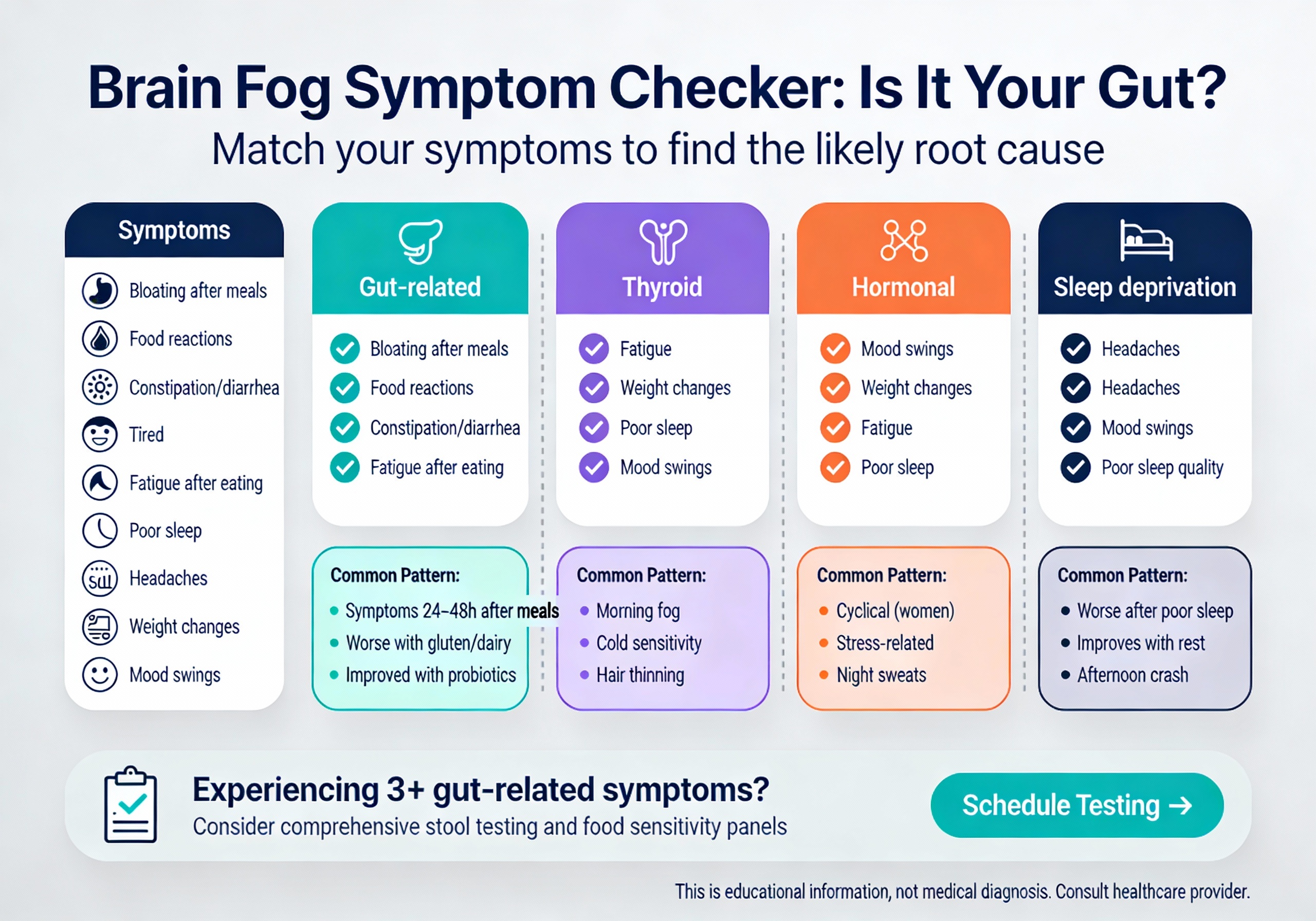
For a personalized plan designed around your labs, metabolism, and lifestyle, schedule a consultation with Alexander Y. Zubkov, MD, PhD. Together, we’ll pinpoint what’s blocking your clarity and build a path to restore your brain and body balance.
You’ve Read the Science. You’ve Seen Real-World Examples.
Now It’s Time to Address YOUR Gut-Brain Connection.
Choose your next step:
Schedule Your $99 Gut-Brain Consultation >>
or
Start With AI Brain Fog Assessment ($17) >>
✓ Board-certified neurologist trained in functional medicine
✓ Comprehensive lab testing & personalized protocols
✓ Telehealth available in MN, AR, TN, GA, MS & FL
✓ Availability is limited to allow for in-depth, personalized care
Frequently Asked Questions
Can gut health cause brain fog?
Yes, imbalances in your gut microbiome can trigger inflammation that affects how your brain communicates, potentially leading to fatigue and poor focus. Research shows that dysbiosis reduces production of short-chain fatty acids (SCFAs), which are critical for blood-brain barrier integrity and neurotransmitter function. When beneficial bacteria decline, inflammatory markers rise, and cognitive symptoms may follow. However, brain fog has multiple potential causes, so gut health is one important factor to investigate among several.
How does the gut-brain connection affect mental clarity?
A balanced gut helps regulate neurotransmitters like serotonin, GABA, and dopamine, while an imbalanced one may release inflammatory signals that interfere with clear thinking. The vagus nerve carries signals from gut to brain continuously. 80-90% of vagal fibers are afferent (gut→brain). When gut inflammation occurs, those signals tell the brain to enter a protective, energy-conserving state, which can manifest as brain fog.
What are practical ways to improve gut health for better brain function?
Eat a fiber-rich diet with 30+ different plant types weekly, avoid processed foods, manage stress, and consider probiotics or elimination of trigger foods under professional guidance. Start by tracking food-symptom patterns to identify triggers, then systematically remove inflammatory foods, support gut lining repair with nutrients like zinc and omega-3s, and introduce beneficial bacteria through fermented foods or targeted probiotics. Consistency over 8-12 weeks is typically needed to see meaningful changes.
When should I see a neurologist about brain fog?
If your symptoms last longer than a few weeks or include headaches, dizziness, or memory loss, consult a neurologist familiar with gut-brain issues. Seek immediate care if brain fog appears suddenly (hours to days), accompanies severe headache with vision changes, confusion, difficulty speaking, numbness, weakness, or coordination problems. For chronic brain fog with digestive symptoms, food reactions, or fatigue after meals, an integrative neurologist can help identify potential gut-related causes alongside other contributing factors.
How long does it take to heal leaky gut and see improvements in brain fog?
Most people notice initial improvements in 4-6 weeks, with more substantial changes by 8-12 weeks. The gut lining regenerates relatively quickly (intestinal epithelial cells turn over every 3-5 days) but restoring microbial balance and reducing systemic inflammation typically takes longer. Factors affecting timeline include severity of dysbiosis, dietary compliance, stress levels, sleep quality, and whether underlying conditions (SIBO, H. pylori, chronic infections) are also being addressed.
Can probiotics make brain fog worse?
Yes, for some people. Those with SIBO (small intestinal bacterial overgrowth), histamine intolerance, or certain dysbiosis patterns may experience worsened brain fog from probiotics or fermented foods. SIBO creates excessive bacterial fermentation in the small intestine, and adding more bacteria (even beneficial strains) can temporarily increase gas, inflammation, and metabolites that affect cognition. If you feel worse within 1-2 weeks of starting probiotics, pause and consult a practitioner who may recommend SIBO testing.
What’s the difference between SIBO and dysbiosis?
Dysbiosis refers to microbial imbalance anywhere in the digestive tract: too few beneficial bacteria, too many pathogenic bacteria, or low diversity. SIBO (small intestinal bacterial overgrowth) is a specific type of dysbiosis where bacteria overgrow in the small intestine, where they shouldn’t be present in large numbers. SIBO can cause malabsorption, nutritional deficiencies, and produces gases (hydrogen, methane, hydrogen sulfide) that may trigger brain fog. SIBO is typically managed with antibiotics or herbal antimicrobials under medical supervision, while general dysbiosis often responds to dietary changes, probiotics, and lifestyle modifications.
Should I get tested before starting gut-healing protocols?
Testing isn’t mandatory but can save time and prevent mismatched interventions. Without testing, you’re making educated guesses about whether you have dysbiosis, SIBO, parasites, or specific food sensitivities. A comprehensive stool analysis, SIBO breath test, and food sensitivity panel can provide a clearer roadmap. If cost is a barrier, starting with a structured elimination diet and symptom tracking is reasonable, but if you’re not seeing improvements after 8-12 weeks of consistent effort, testing becomes more important to avoid wasting additional time on protocols that may not address your specific imbalances.
Do I need to avoid all fermented foods if I have brain fog?
Not necessarily. Fermented foods benefit most people with dysbiosis, but those with histamine intolerance or SIBO may react poorly. Histamine-rich fermented foods (aged cheese, sauerkraut, kimchi, kombucha) can trigger brain fog, headaches, and anxiety in people whose bodies can’t break down histamine efficiently. If you suspect histamine issues, try low-histamine probiotics (Bifidobacterium strains) and fresh probiotic yogurt instead of aged fermented foods. Monitor your response. If you consistently feel worse, that’s valuable diagnostic information to share with your healthcare provider.
How does Mind Body Neurology approach gut-brain issues differently?
We integrate neurology, functional medicine, and comprehensive testing to identify root causes, not just manage symptoms. Dr. Zubkov doesn’t treat brain fog as only a neurological issue: he investigates the gut microbiome, hormone balance, mitochondrial function, inflammatory markers, and nutrient status to understand why your brain isn’t functioning optimally. The approach is personalized based on lab results and clinical patterns, combining dietary interventions, targeted supplementation, lifestyle optimization, and when appropriate, peptide therapies or other advanced treatments. You receive a clear, individualized roadmap based on your specific test results and health history, not generic protocols.
Ready to clear the fog and reclaim your mental clarity?


